Tuesday, December 3, 2013

The job outlook for healthcare administrators


One of the most important factors in my choice of degree was the projected job outlook. After all, who wants to spend half a decade getting an education in a career field that isn't likely to provide a good living for them? Not I, said the college student with no money to waste on tuition that leads nowhere.

Thankfully, the job outlook for healthcare administration majors like me is promising. The Bureau of Labor and Statistics' Occupational Outlook Handbook, an excellent resource for anyone interested in statistical information about their career path, highlights some of the data that supports this claim.

All jobs are expected to grow by about 14% over the next decade, but healthcare administrators can look forward to a projected 22% increase in jobs, which is faster than normal.

"As the large baby-boom population ages and people remain active later in life, the healthcare industry as a whole will see an increase in the demand for medical services. This increase will in turn result in an increase in the number of physicians, patients, and procedures, as well as in the number of facilities. Managers will be needed to organize and manage medical information and staffs in the healthcare industry. There will likely be increased demand for nursing care facility administrators as well as baby boomers age"  
(Bureau of Labor and Statistics, 2010). 

I'm looking forward to finding a job in my degree field, and according to these statistics, it shouldn't be too hard!

Wednesday, November 27, 2013

Healthcare Administration duties, part 2

I've covered what healthcare administration is, why I'm interested in it, and some of the job duties a healthcare administrator has. There are more job functions of a healthcare administrator that I haven't talked about yet, so let's explore those! 


In addition to the job duties listed in the previous post, Healthcare Administration duties, part 1, healthcare administrators should feel comfortable:
  • Planning and administering programs and services in a healthcare organization, including staff administration and training
  • Directing employee recruitment, hiring, and training
  • Establishing efficient work schedules and assignments for staff
  • Maintaining awareness of current medical advances, studies, computerized diagnostic and treatment equipment, data processing technology, government regulations, health insurance changes, and financing options
  • Monitoring the use of diagnostic services, inpatient beds, facilities, and staff to ensure effective use of resources and assess the need for updates to those areas
  • Developing and maintaining computerized record management systems to store and process data such as personnel activities and information


As you can see, the job duties span across departments and require the administrator to see "the big picture" while planning for change.

Healthcare Administration duties, part 1

I've talked about what healthcare administration is and why I'm interested in it, but I want to cover some of the job duties a healthcare administrator has. 

The College Board's Big Future website asks some important questions for would-be healthcare administrators: Are you ready to ensure quality health care? Set priorities and policies? Supervise employees? Improve efficiency? Keep costs down? Work with doctors and other healthcare professionals? Attend lots of meetings? Work long hours? If that list of job requirements didn't get you down, maybe healthcare administration is the career for you, too! 


Healthcare administrators can expect to direct and supervise the job activities of the medical, nursing, technical, clerical, service, and maintenance departments of their work setting.

Healthcare administrators conduct the financial operations of the healthcare setting, which includes accounting, budget planning, expense authorizations, service rate establishment, and financial reporting. Sometimes, such as in a large organization, they'll simply supervise these operations; in a smaller setting, they might be in charge of completing the tasks themselves. 


Healthcare administrators must be excellent communicators because they'll be in charge of maintaining the communication between governing boards, the staff, and department heads. In a nutshell, they'll be attending lots of meetings and keeping the communication lines open between departments.

Planning should be a strong suit for anyone pursuing a career in healthcare administration. The ability to review and analyze the activities and resulting data of their organization is essential for planning. Proper planning results in better service utilization. 

Why I'm Interested in Healthcare Administration

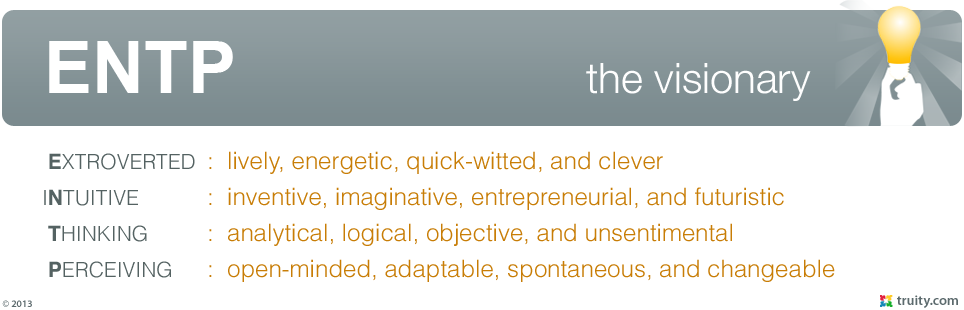
My MBTI personality type is ENTP (Extroverted, iNtuitive, Thinking, Perceiving) and some of the traits that go along with that personality type are being a "people person," enjoying solving problems, understanding issues intuitively, and making and carrying out effective plans. I think that makes me a good fit for a career path like Healthcare Administration because I enjoy leadership roles and problem solving. I'm good at organization of information and enjoy working with computers and technology. I am often able to see "the big picture," and I think that's a good quality to have in a field like this, where the big picture is the true focus of all your day-to-day activities.


It's easy to think that this type of career is solely about business functions, but in any management role, healthcare to restaurant, you're leading others, just in different ways. You have to be able to connect with, direct, and coordinate your subordinates. Without proper and effective leadership (more on that in the next post), no amount of business know-how will create a cohesive team and work environment. The business side is clearly essential, however, and just being good at "managing people" without a solid understanding of the technical side of the deal will not get you far in this career. After all, in healthcare management, the job duties are mainly business functions (finance, admissions, operations, and personnel). 

That's why I'm taking my college courses (Community Healthcare Management, Healthcare Research, Nursing Informatics, Medical Terminology, etc.) seriously--they're preparing me for the duties I'll be expected to understand and know how to perform when I graduate in August of 2014 and (hopefully!) get a job in this field.

What is healthcare administration?

When I first heard about Healthcare Administration as a degree option, I had no idea what it meant. I thought it sounded like someone who would be administering healthcare, which I was clearly wrong about. 

The first site I used to find out more about the major and line of work was the Bureau of Labor and Statistics' Occupational Outlook Handbook. It's listed there as Medical and Health Services Management, and I've realized that there isn't currently a universal term that describes healthcare administration. That makes searching for job opportunities a little more difficult, because there isn't a search term you can use that will catch all the monikers for healthcare administration. 

Let's look at the etymology, or word origin, of administration. The word administrate comes from the Latin word administratus, which translates to "managed."  Healthcare administration can be literally be translated to "healthcare management".

administrate (v.) 
1630s, from Latin administratus, past participle of administrare (see administer). In modern use a back-formation from administration. Related: Administrated;administrating.

Healthcare administrators, also called medical and health services managers, manage entire or parts of healthcare operations. When we think of a manager, we think of someone who is planning, directing, and coordinating processes. That's exactly what a healthcare administrator does--they plan, direct, and coordinate health services in the institution they're employed with.

Healthcare administrators can be employed in a variety of settings, including hospitals, nursing homes, and group medical practices. They are usually located in the office of such a setting because they're not doing medical work, they're doing administrative work. 

The field of healthcare is one that requires employees to quickly adapt to shifting circumstances and knowledge. Managing healthcare is no different--when managing healthcare, you are (in a sense) managing and leading change, hence the name of this blog. Keep checking back for more posts about my interest in and pursuit of a degree in healthcare administration! 

Source: Online Etymology (2013). "Administrate." Retrieved from http://www.etymonline.com/index.php?term=administrate